Battery Passport: QR Code Creates Clarity for Trades Businesses
The battery passport bundles information on origin, carbon footprint and recycling in a QR code, creating opportunities for repair and sustainability.
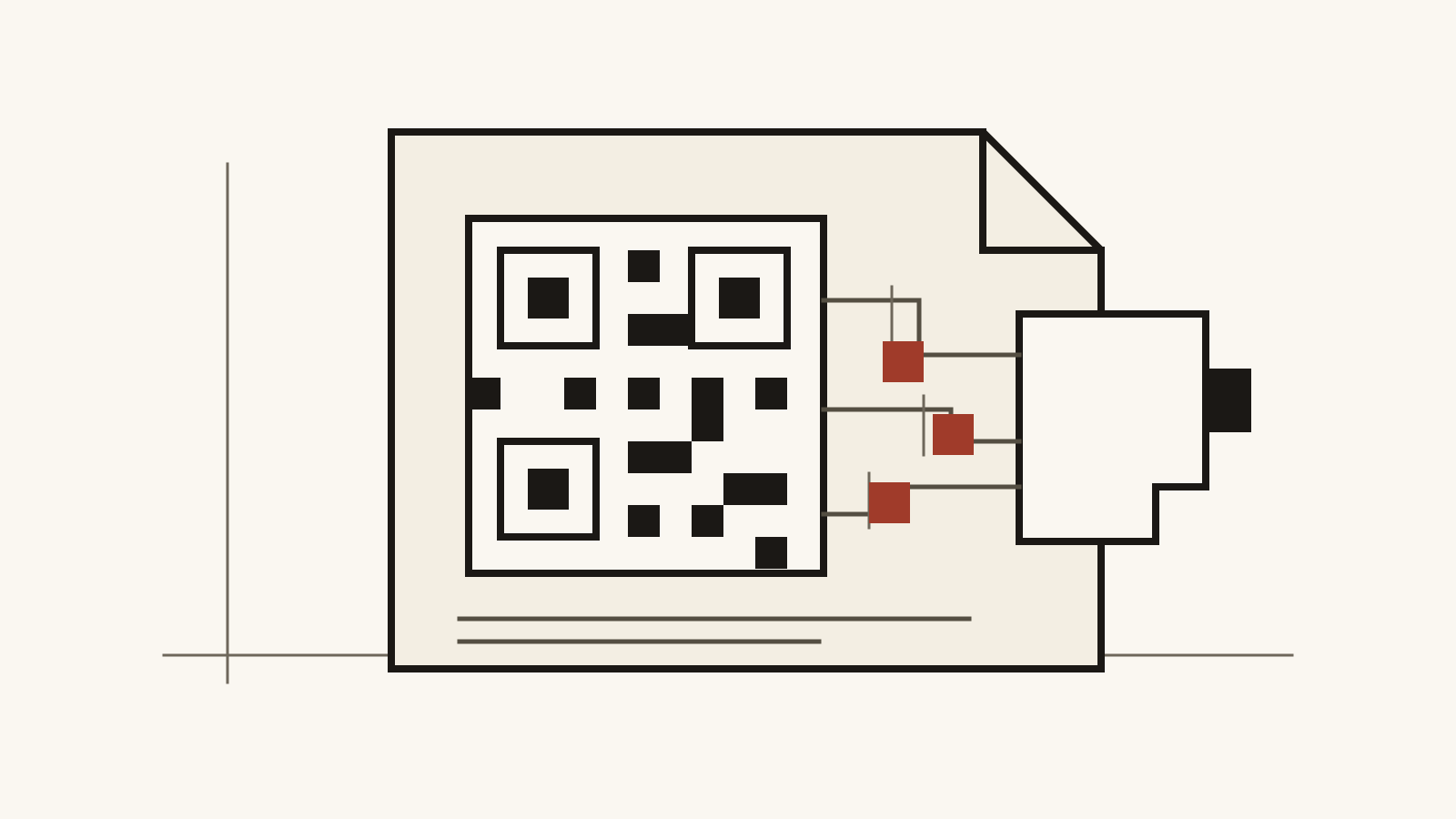
The battery passport can save trades businesses time when searching for information and provide greater certainty when making repair decisions. Instead of treating a battery as an opaque black box, technicians will be able to access relevant details using a QR code. These include the carbon footprint, origin and recycling information. Automotive and electrical businesses will face additional organisational work, but improved access to data also creates opportunities for more efficient repairs and a credible sustainability profile.
From Component to Accessible Data Source
The battery passport makes information relevant to handling a battery available on mobile devices. The QR code serves as the access point: once scanned, the stored information can be assigned directly to the respective product.
This applies to batteries in electric cars and e-bikes as well as larger industrial batteries. Its practical significance therefore extends from vehicle servicing and work on electrically powered two-wheelers to commercial and industrial applications. A business’s role depends on the services it provides: some primarily need the data for diagnostics and repairs, while others require it for replacement, transfer or recycling.
The battery passport is also part of a broader shift towards digitally available product information. The article on the digital product passport for trades businesses explains the general requirements this type of data approach places on businesses. The article on EU packaging regulation and its consequences for the trades also shows that sustainability information increasingly needs to be incorporated into operational processes.
Greater Transparency, but Not Without Process Work
The practical benefit starts with repairs. If technicians can access the required battery information directly, they no longer need to gather relevant details from different sources. This can speed up decisions and make the work more traceable.
Recycling information is also becoming more important. It can help a business transfer a battery correctly into the designated next stage at the end of its useful life. Information on origin and carbon footprint also creates transparency for customers, clients and business partners when these details are needed for advice or documentation.
However, the QR code alone does not solve an operational problem. What matters is how the data enters existing workflows. Employees need to know when to scan the code, which information is relevant to their job and where necessary details must be documented. The battery passport therefore also raises questions about data quality and reliable digital interfaces.
What Does This Mean for Trades Business Owners?
Business owners face three key tasks. First, they should identify the workstations where battery data is needed. This may include reception, the workshop, the job site, customer consultations or documentation. Second, responsibilities must be clear: who scans the code, who assesses the information and who records the result?
Third, the battery passport should not be viewed solely as an additional obligation. Businesses can use the available information to explain repairs more clearly and demonstrate their expertise in handling batteries sustainably. Clear customer communication builds trust, especially when complex components are involved.
The principle is simple: more data does not automatically lead to better decisions. The information must match the job, be assigned correctly and remain understandable to employees. The benefit only emerges through a simple, repeatable process.
Recommended Actions: A Practical Check for Your Business
Use this checklist to incorporate the battery passport into existing workflows:
Identify affected services: List all work involving batteries from electric cars, e-bikes or industrial applications.
Check scanning options: Ensure that the responsible employees can access the QR code at the point of use.
Define a mandatory step: Specify the stage of the job at which the battery passport must be checked.
Standardise documentation: Decide which relevant details must be recorded in the job file or customer record.
Brief the team: Use a typical workflow to demonstrate how the data should be read and used.
Explain the customer benefit: Briefly describe how the information supports repairs, transparency or recycling.
Frequently Asked Questions About the Battery Passport
What is the battery passport?
The battery passport provides relevant information about a battery through a QR code. This includes its origin, carbon footprint and recycling details.
Which trades businesses are affected by the battery passport?
It is particularly relevant to automotive and electrical trades businesses that work with batteries from electric cars, e-bikes or larger industrial applications.
How can businesses prepare?
Businesses should clarify responsibilities, mobile scanning options and documentation processes. A short practical test using a typical job will show whether the information can be used without unnecessary additional steps.
Source and reference: “QR-Code statt Blackbox: Der Batteriepass kommt” – Deutsche Handwerks Zeitung.