Cash Register Requirements, Retirement Planning, Fraud: What Matters Now
COVID special payments, fraudulent emails, and electronic cash registers: Craft businesses should review these tax-related issues now.
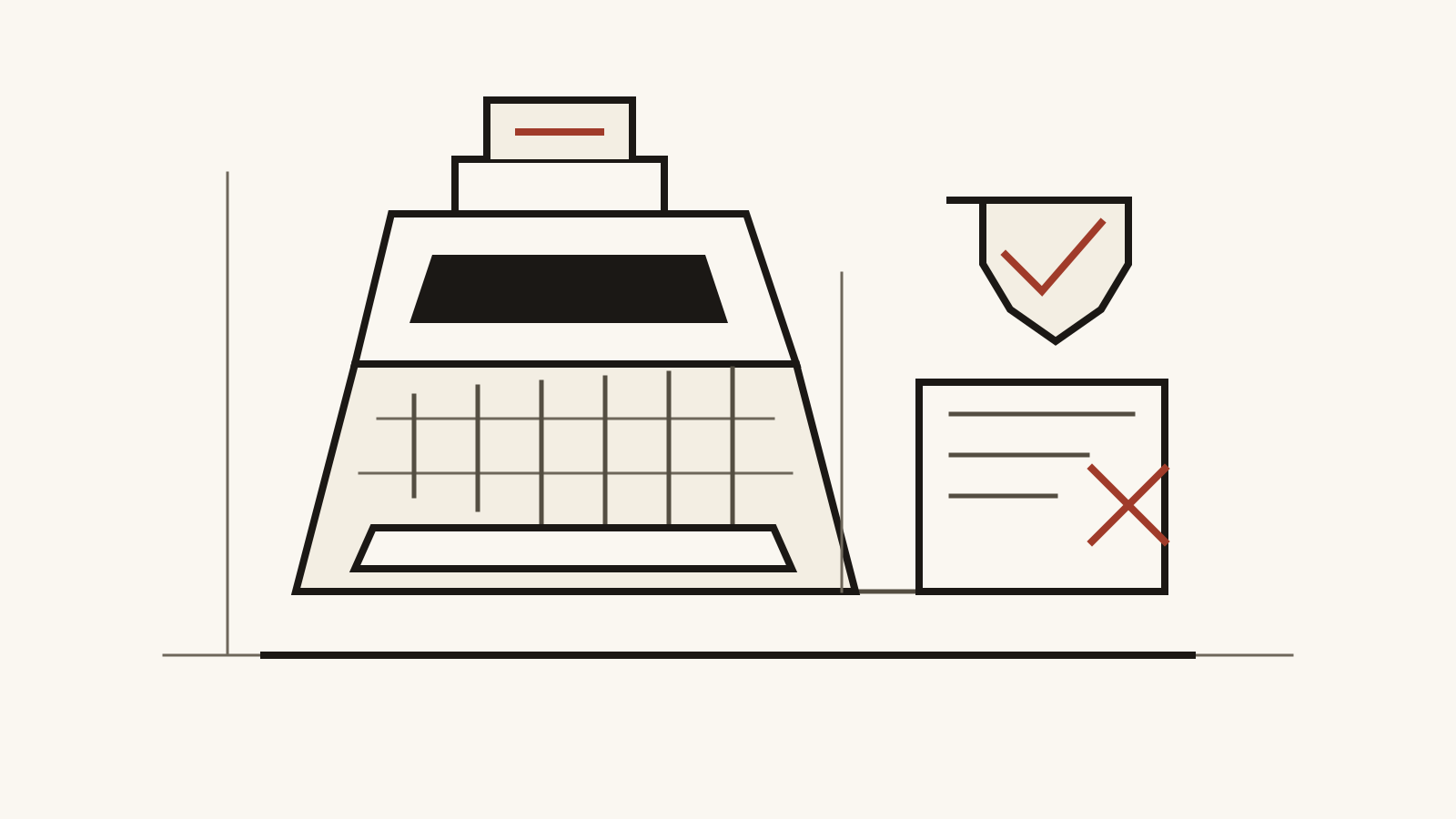
Craft businesses should now prioritize three areas: documenting COVID special payments so that they withstand an audit, consistently blocking fraudulent emails, and preparing for the potential electronic cash register requirement from 2027. This takes some time today, but it protects money in the future and provides greater security during audits, payments, and operational decisions. Retirement planning also belongs on the agenda, but it should be considered separately from the more immediate audit and implementation tasks.
Facts and Analysis
Tax authorities are currently focusing on COVID special payments. Payroll tax auditors are reviewing how businesses handled and documented these payments. Businesses must therefore ensure that the related records are easy to find, complete, and clear in substance.
This involves more than individual accounting entries. Working papers, payroll records, and internal supporting documents should combine to present a coherent picture. Unclear or inconsistent documentation creates additional work during an audit. The article Secure Input Tax Deductions: Describe Invoices Precisely also shows why precise supporting documents matter in general.
At the same time, fraudulent emails are circulating in the name of Germany’s Federal Central Tax Office. A familiar government agency name may cause employees to trust a message too quickly. The risk of clicking a link, opening an attachment, or disclosing information rises particularly in busy offices under time pressure.
A credible-looking sender name is therefore not sufficient proof of authenticity. Businesses need a defined verification process: Who checks suspicious messages? Which independent channel is used to confirm a purported request from a government authority? And to whom should employees report a suspected fraud attempt? Such a rule links customer and government communications with clear security procedures.
The third priority is the electronic cash register requirement that many businesses may face from 2027. The available summary does not indicate which companies will be affected specifically. Nevertheless, waiting until shortly before the potential start date would be risky. Businesses can already record which cash registers they use, how transactions are documented, and where technical or organizational gaps exist.
The announced overview covers a total of twelve current tax-related topics. In addition to cash registers, audits, and attempted fraud, these include retirement planning. However, the summary does not provide enough detail for specific retirement-planning decisions. Craft business owners should therefore examine this issue with qualified professional support instead of drawing far-reaching conclusions from a general overview.
What Does This Mean for Craft Business Owners?
These are not isolated tasks for business owners. Every topic concerns the quality of operational information: Auditors need transparent supporting documents, employees need reliable rules for handling suspicious messages, and an electronic cash register requires proper accounting and documentation processes.
The first step is therefore to assign clear responsibilities. Who manages the documents relating to COVID special payments? Who assesses messages that allegedly come from a tax authority? Who reviews the current state of the cash register systems? Without clear ownership, important tasks often fall between management, tax advisers, and office staff.
Related risks should not be overlooked either. Responding early helps when tax deadlines are involved, as explained in Late Tax Return: What Businesses Can Do. Corporations should also understand when managing directors are liable for a limited liability company’s tax debts. Businesses working across borders or at changing locations should additionally check when a permanent establishment is created for tax purposes.
Recommended Actions
Finish with this compact four-point checklist:
Consolidate the records: Gather all available supporting documents relating to COVID special payments and check whether the payroll records and documentation are consistent.
Protect against fraudulent emails: Establish a rule that links, attachments, and payment requests in purported government emails are processed only after independent verification.
Take stock of cash registers: Document the cash registers in use, the related processes, and any unresolved questions so that a potential transition before 2027 can be planned.
Schedule professional advice: Discuss unresolved tax and retirement-planning issues specifically with the responsible qualified adviser.
FAQ
Why should businesses review their COVID special payments again?
Because payroll tax auditors from the tax authorities are currently reviewing these payments. Businesses should therefore keep their records complete, easy to find, and readily understandable.
How should businesses handle purported messages from Germany’s Federal Central Tax Office?
The sender, content, and requests should be verified independently. Suspicious links or attachments should not be opened hastily.
What would the potential electronic cash register requirement from 2027 mean?
Many businesses may need to prepare both technically and organizationally. An early assessment clarifies what action the individual business needs to take.
Frequently asked questions
Because payroll tax auditors from the tax authorities are currently reviewing these payments. Businesses should therefore keep their records complete and readily understandable.
The sender, content, and requests should be verified independently. Suspicious links or attachments should not be opened hastily.
Many businesses may need to prepare both technically and organizationally. An early assessment clarifies what action the individual business needs to take.