Site documentation: from scraps of paper to solid evidence
Photos in a private phone album are not documentation. How site photos become evidence that holds up in a dispute.
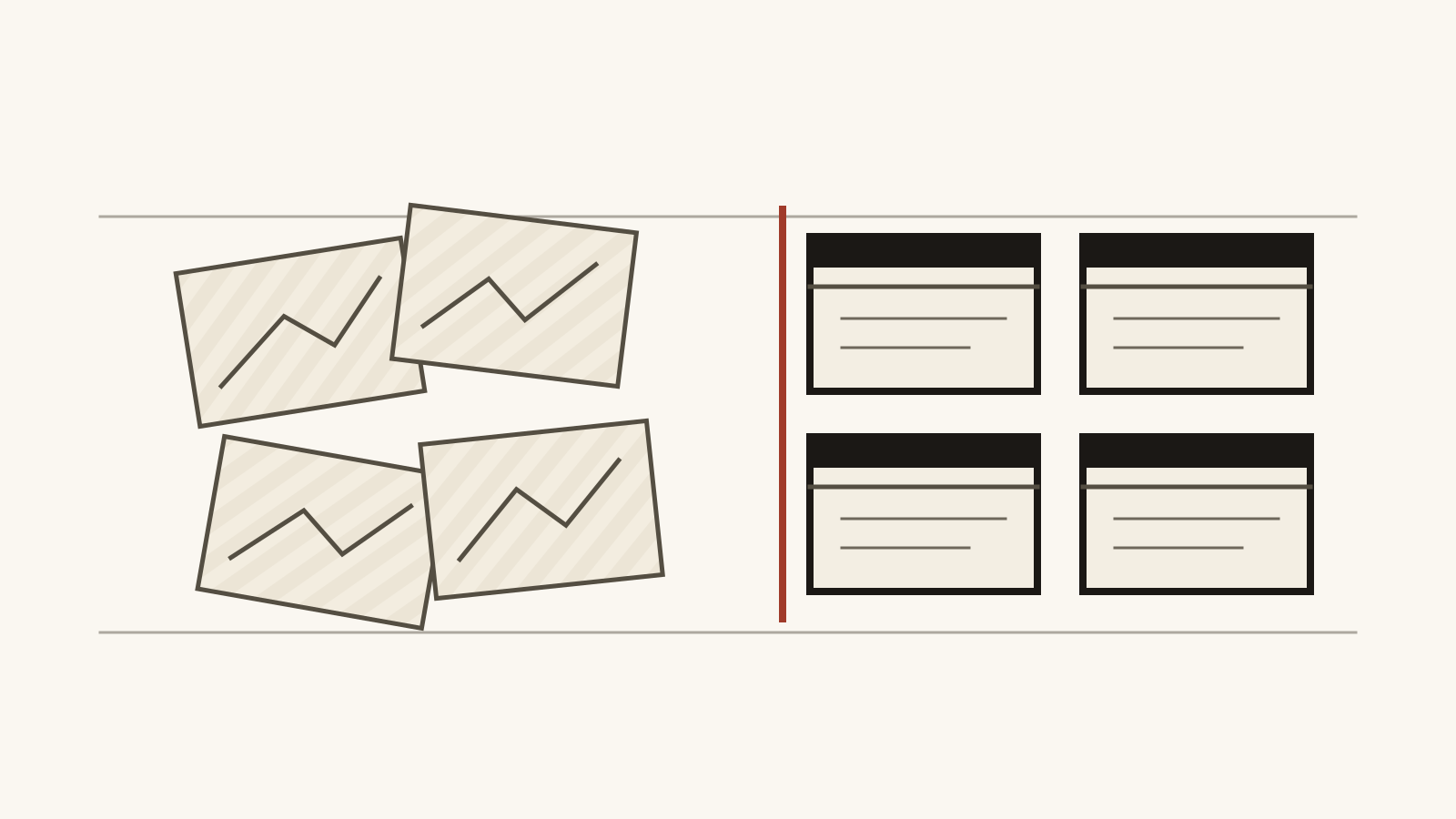
Almost every business documents with the phone these days. That is good. The problem starts afterwards: the photos sit in the fitter’s album, with no link to the order, no date in the picture, no comment. When someone claims six months later that the pipe ran differently, the photo is practically worthless – or cannot be found at all, because the colleague now works for the business next door.
Documentation in the trades has two purposes: it should make the work traceable, and it should hold up in a dispute. Neither fails on the camera – they fail on the filing.
What makes documentation solid
Four properties decide whether a shot is worth anything later:
The standard routine that has proven itself
Set a fixed order and train it once. After that it runs by itself:
Arrival: photograph the existing state before anything is touched. Even when it feels unnecessary. Especially then.
Before closing up: photograph everything that will later disappear under plaster, screed or cladding. With a tape measure or an object as a size reference in the picture.
Deviations immediately: whatever was not as planned – damage to the existing structure, missing material, changed customer wishes – is documented the moment it is noticed, with a comment.
Handover: the final state plus, if available, a signed protocol.
The third point is the most valuable. Claims for extras rarely fail on the law and almost always on the missing documentation at the right moment.
What software actually contributes
The value of an app is not in the camera but in four points:
Automatic assignment to order and item, without anyone sorting files.
One central place. The photos live in the business, not on private devices. When an employee leaves, the documentation stays.
Offline capability. In the basement and the shell there is no signal. The app has to store locally and sync later – otherwise it will not be used after the second failed shot.
Output as a report. A PDF protocol with images, timestamps and comments that you can send to the customer or the insurer without assembling it by hand.
Everything else is trim, not core.
Is the phone enough, or does it need a camera?
For site documentation the work phone is usually enough. What counts is not the resolution but that assignment, time and comment come along – and a phone’s camera app does not do that by itself.
A dedicated camera only pays off in special cases: when the business deliberately wants no private devices in use, when work happens under rough conditions and a rugged device is needed, or when details are regularly captured that a phone lens cannot handle – crack widths or weld seams, say.
If you do buy an additional device: make sure it keeps time and date reliably and that the shots end up in the same filing as everything else without detours.
What to clarify before you switch
The honest start
You do not have to buy anything to be better off tomorrow than today. The most effective first step costs nothing: a fixed rule that every site is photographed before starting and before closing up, and one shared place in the business where these pictures land – named by order number.
Once that habit sits, an app is worth it. Before that, it only digitalises a chaos that was already one.
Frequently asked questions
Shots of the existing state before starting, of the state before closing up critical areas, of all deviations from the plan, and of the final state. It only becomes solid through the link to the order, a traceable time and a short description.
A general legal duty to photograph every site does not exist. What a business is obliged to do follows from the individual contract. What matters in practice is something else: whoever claims something in a dispute has to prove it – and without documentation that rarely succeeds.
The magazine names no products. Four capabilities are decisive: automatic assignment of shots to order and item, one central storage location in the business instead of private devices, offline capability for basements and shell construction, and output as a report with images, timestamps and comments.
In four fixed steps: on arrival, photograph the existing state before touching anything; before closing up, capture everything that disappears under plaster, screed or cladding; record deviations immediately; at handover, the final state. The third step is the most valuable, because claims for extras almost always fail on missing documentation.