AI in a trades business: five uses that already save time
Artificial intelligence will not install your heating. But it takes office work off your hands – here are five uses that work in daily business.
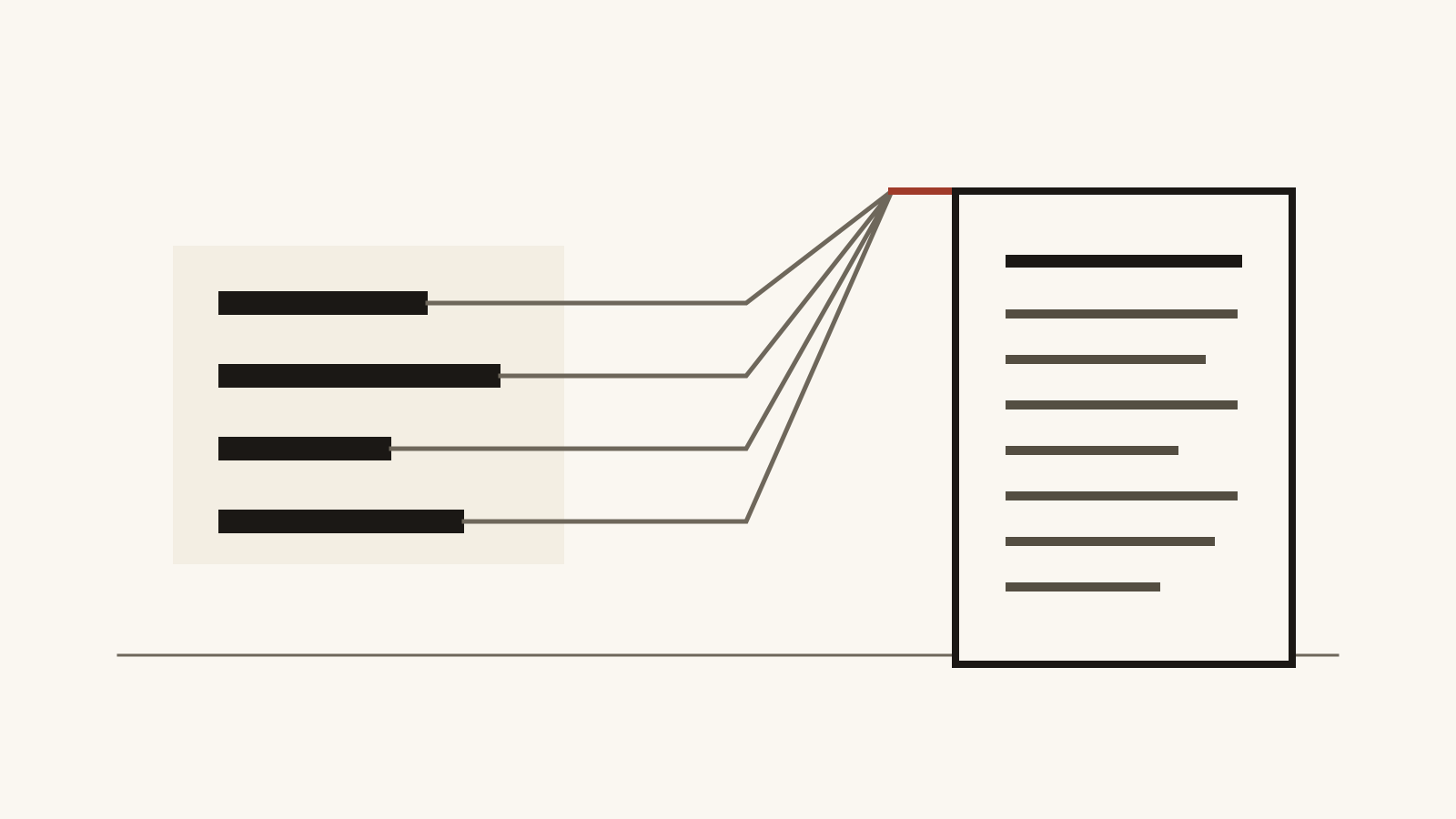
A lot is said about AI in the trades, and little of it is concrete. So let’s take it in order: artificial intelligence installs nothing, lays no pipes and makes no diagnosis on a system it cannot see. What it is good at is speech and text – and the business produces more of that than most people realise.
The bottleneck in many businesses is not the workshop. It is the evening in the office.
1. Quote texts from keywords
After the site visit you dictate three sentences into your phone: “Bathroom complete, 6 square metres, old tiles out, new pre-wall installation, wall-hung WC, level-access shower, customer wants a natural stone look.” A language model turns that into a structured quote text with line items and a description of works.
What you get is a draft – not a finished quote. You set the prices, you check the line items. But you no longer start in front of an empty screen, and for most people that is the real time sink.
2. Pre-sorting and answering customer enquiries
Twelve emails a day, eight of them with the same question about dates and price ranges. An AI assistant can categorise incoming enquiries – new customer, complaint, rescheduling, emergency – and prepare draft replies that you merely approve.
The rule that has proven itself: draft yes, send no. Automatically sent replies go wrong exactly when it gets expensive. The time gain is in the wording anyway, not in clicking “Send”.
3. Turning measurement and meeting notes into usable form
Having voice recordings from the site transcribed into text now works reliably, even with background noise and dialect. From the text, a structured note can then be produced: what was agreed, which measurements were taken, what is open, who does what by when.
That replaces no documentation in the legal sense. But it replaces the note that went through the wash in a trouser pocket.
4. Searching tenders and bills of quantities
Anyone working for commercial or public clients knows bills of quantities with hundreds of items. A language model can summarise such a document and search it specifically: which items concern my trade? Where are the deadlines? Which additional requirements are unusual?
That is a preliminary check that makes it easier to decide whether the close reading is worth it. The binding check remains yours.
5. Job ads, website and social media
The most unspectacular point and the one with the best ratio of effort to effect. Texts for job ads, the website or a post about a successful project take minutes instead of a lost Sunday morning.
With skilled labour scarce, a properly worded job ad that actually sounds like your business is no side issue.
What you need to watch
A realistic start
Take one recurring writing task that regularly annoys you. Usually that is quote texts. Try for two weeks whether the draft is faster than your own typing. If so, add the next task.
What you do not need is an AI strategy. What you need is an evening that ends on time again.
Frequently asked questions
For speech and text: drafting quote texts from keywords, pre-sorting customer enquiries, structuring measurement and meeting notes, searching tender documents, and writing job ads and website copy. On the building site itself it achieves nothing.
Only via business accounts with a data processing agreement, not via free personal accounts. Names, addresses and contract details are personal data. A simple rule: what you would not write on a postcard, you do not type into an AI tool.
No. A language model words the quote text; the numbers come from your own calculation. Ask the model for prices or quantities and it invents plausible-sounding values.
One single, frequently recurring writing task where the time saved can be measured. Every result is professionally checked before it leaves the building – the responsibility stays with the business.